Tuesday, June 20, 2006

10% off is music to a girl's ears

It amazes me the pavlovian dog response that hits me when I see the word "sale". Even if I'm not in the market for anything at all, I'm compelled to find out more, check out what bargain I might miss out on. Yes it's theoretically better to reward than discount - but it does get people shopping.

This little email ad from Red Balloon Days was a case in point. It's not a clothing label, nor is it even a consumer brand. It's a (mostly corporate) experiences and gift brand. So my first instinct would be to say don't use a retail marketing tool like discounting. Yet it got me to click...and I hardly think I'm the only one that will.

So perhaps taking a marketing hint from a completely different industry and trialling it isn't such a bad idea. Except for your reduced margin, using a cheap tool like email and limiting the time of the offer (eg. 24 hours) is a pretty cheap way to test an inexpensive little marketing tool.

Saturday, June 17, 2006

Take the "bland" test (and get more specific)

If you are creating a piece of marketing material, I think you need to subject it to the "bland" test. If your headline or copy is so generic, it could work for another business (or even a competitor) - ditch it. Go back to the drawing board and make it specific enough that it's actually got a real connection with your business.

And don't just take my word for it.

Roy Morgan presented a paper in Prague at the 12th Worldwide Readership Research Symposium (try saying that quickly and three times in a row!).

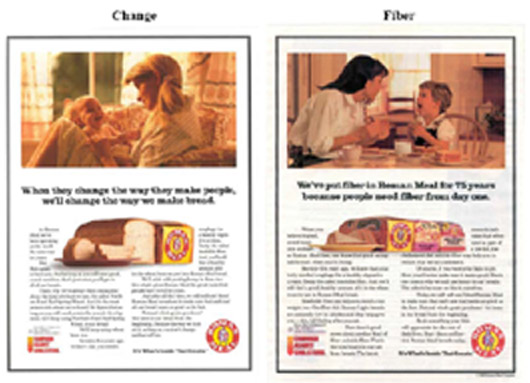
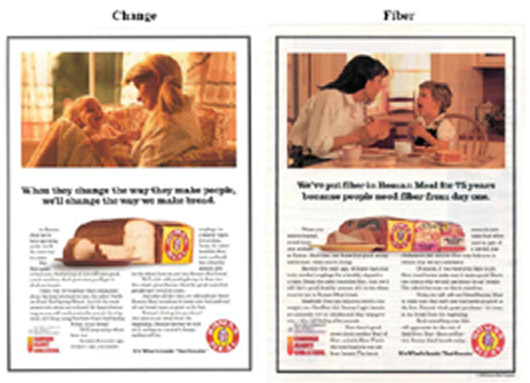
At any rate, they showed the difference in Return on Investment on the two ads below.


The first headline says: When they change the way they make people, we'll change the way we make bread.

The second headline says: We've put fibre in Roman Meal for 75 years because people need fibre from day one.

Which do you think worked best?

In terms of persuasion performance, if the second ad returns $100,000, the ad on the
right returns $258,000. The second ad basically kicks butt over the first (and it helps that the headline actually matches the pic)

Being compelling is very cheap - but very hard!


You know, if you have a compelling enough marketing message and offer, it doesn't take much to have a big impact. So back on a bit of a recurring theme, but perhaps it's time to take a bit of a risk and put something out in the marketing that makes it hard for people not to want more.

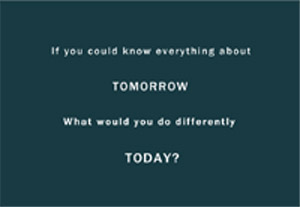
I decided to check out futurist Faith Popcorn's site when doing some research and I think her extremely simple site - breaking many rules as it has no real information - starts with a hugely compelling message: if you could know everything about tomorrow, what would you do differently today?

Get's you thinking, doesn't it. It then just goes to a screen that says "Let's Talk" and provides her contact details. And if you were in the target market that could afford her services, I'm sure you would pick up the phone.

One simple question but you know immediately why you should call. I was impressed. How can you make your message this compelling?

Thursday, June 15, 2006

Like a great SME (small business) marketing guide (for nicks)?

This is a totally zero budget post - a free marketing guide for small business I came across that's a great overview for non-marketers.

The Australian Information Industry Association has put together an SME marketing guide. Whilst it's a tech association, the vast majority of the info in the guide applies to all sorts of small business.

It also has a bunch of great case studies in it. Best of all, it's free. So download it today and build your marketing knowledge for nicks!


(And by the way - what a great way to build a database - giving away valuable free information - and idea for another post!)

Can't afford expensive database software? How's $30 a month sound?

I believe it's essential to have a customer & prospect database these days, in ANY type of business.

And it truly scares me how few businesses have one.

Outlook & excel really aren't enough, access can be clunky and decent CRM (customer relationship management) systems usually start at well over the $1,000 a seat.

When looking for a local email marketing provider for a client, I came across Vision6. They provide email and sms services. But they will also host your database. And you can add all the fields you want in this database, give people access to update their own details if you want, search it and access it from anywhere AND build lists to market to based on criteria. It even has some handy auto email functions.

So it occured to me, this is also a great zero budget database solution. For under 1000 records it's $30 a month - you can't get much cheaper than that!

I'm sure there's other providers out there offering something similar. So why not use this as an inexpensive, centrally accessible database tool - with the bonus that you can then use it on a fee per use option if you decide to use for email marketing.

Wednesday, June 14, 2006

Sorry + fix = Customer Loyalty

Continuing a thought from the previous post, as a business are you prepared to go further and admit when you're wrong?

TRUE customer loyalty to a brand or business is often built when a company gets something wrong - then admits it and bends over backwards to fix it.

You see, we've come to expect good service and for things to work. So when they do work, no-one notices (just think about your average IT guy or girl). Yet when something goes wrong, you ALWAYS notice. And there's a real moment of truth for a company in how it deals with that.

Many companies fail dismally. Just check out Not Good Enough to hear some stories that will curl your toes. Yet think about the last time someone went out of their way to fix up a mistake made...and how many people you told. We often only notice GOOD service when it's correcting (or contrasting) to BAD service.

In the 1990's I worked for a major telco that made a major bungle. We accidentally "churned" a bunch of people to our service without their written permission. A whole bunch of them. Panic stations ensued when the tech guys told us what had happened...and that to churn them BACK without their consent would be mistake number 2.

So we made a tough call - we decided to send a letter to these people and admit our error and ask what they wanted us to do. Of the thousands of letters we sent out, have a guess how many people opted to churn back? All? Half? A quarter?

Actually, about a hundred. Well under 5%. And we had a bunch of calls from people gushing about how nice it was to see some honesty in business and that as a result of admitting that mistake, they'd decided we were the company for them.

So for a zero budget idea to build massive brand loyalty, make sure you deal with customer issues, complaints and problems in a timely manner - and go out of your way to fix them if you can. You'll then start to achieve marketing nirvana - customers as advocates.


Be brave - admit when you're wrong (or something's wrong with you)


Imagine the board meeting, years and years ago, when someone pitches this positioning line to Avis management:"Avis is only no.2 in rent-a-cars".

I mean, now we know it's a great marketing success story. But imagine the bravery of taking a negative, admitting it...and then turning it into a positive.

Imagine an accountant that says: The bill might hurt...but your business will feel so much better

Or a food that says: We might taste terrible, but we're ridiculously good for you (spirulina anyone?)

Or a bank that admits: Yes we have fees...but we have the service to match

I'm not a copywriter, but you get the idea. You see, brands like Joy (the most expensive perfume in the world) and Listerine (a taste you hate twice a day) took a negative, were honest and then spun a positive. Yes, these are big brands that had the advertising might to make sure we knew about them, but even for a small budget business, this type of positioning statement gets massive cut through.

But are you big enough to admit a negative?